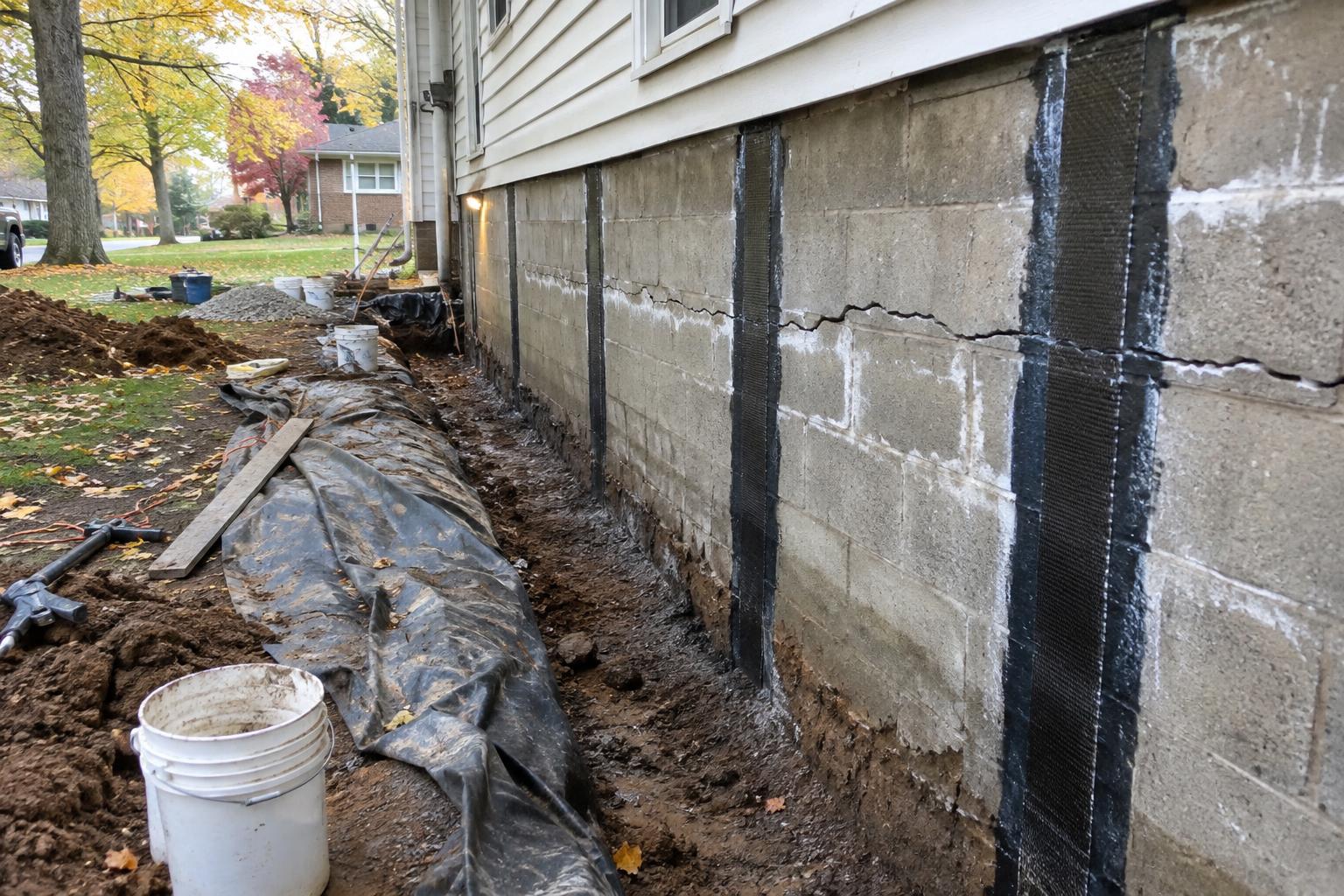
If you live in Hinckley and you have noticed a crack creeping up the basement wall, a door that no longer latches, or a block wall that looks like it is leaning in, you are not imagining things. These are some of the most common calls we get in this part of Medina County. The good news is that most of these problems have a clear cause and a proven fix. The work is not mysterious once someone explains it in plain terms.
Hinckley sits on heavy clay soil, and that soil does a lot to your foundation over the years. When it rains, the clay swells and pushes against the walls. When it dries out in summer, it shrinks and pulls away. Add our lake-effect winters, where the ground freezes and thaws over and over, and you have soil that is almost never sitting still. Older block and stone foundations feel every bit of that movement.
Why Hinckley Foundations Start to Move
Most of the pressure on a basement wall comes from the soil outside it. We call that lateral pressure. When clay gets saturated after a wet spring, it presses hard against the block. Over time that steady push causes the wall to bow inward, usually near the middle, and you start to see a horizontal crack running across the courses of block.
Settlement is a different problem. That happens when the soil under the footing gives way or washes out, and a part of the foundation drops. You often see settlement as a stair-step crack that runs diagonally through the mortar joints, wider at the top than the bottom. Doors and windows in that area go out of square. Both issues are repairable, but they call for different methods, which is why an honest inspection matters before anyone quotes a price.
How We Fix Bowing and Cracked Walls
For a wall that is bowing but still structurally sound, carbon fiber straps are often the right answer. We clean the block, bond the straps vertically from the floor to the sill plate, and anchor them so the wall can no longer move inward. The straps are thin and sit flush against the wall, so you can still finish the basement later.
When a wall has moved further or has cracks that are actively widening, we use steel I-beam braces set against the wall and anchored to the floor and the floor joists above. These braces hold the wall in place and, over time, can allow it to be straightened. The right choice depends on how far the wall has already deflected. That is something a technician measures on site rather than guesses.
Settlement, Piers and Getting Back to Level
When a footing has settled, the fix usually involves piers driven down past the unstable clay to firmer soil or bedrock. Helical piers thread into the ground and transfer the weight of the house onto stable ground below. Push piers do similar work using the weight of the structure to drive them deep. Once the piers are set, the foundation can be lifted back toward level and secured. This is the kind of job where foundation repair in Hinckley needs a careful plan, because lifting a house too fast or in the wrong order creates new cracks instead of closing old ones.
Water Is Almost Always Part of the Story
Here is something many Hinckley homeowners do not expect. The same water that cracks a wall is often the thing you need to control to keep the repair working. If the soil outside stays saturated, the pressure comes right back. That is why we look at grading, downspouts and drainage during a foundation visit, and why structural work often goes hand in hand with Basement Waterproofing. An interior drain and a sump pump take the water load off the wall so your repair lasts.
We also look for efflorescence, that white chalky residue on block. It tells us water has been moving through the wall for a while. Finding it early, before the block starts to crumble, saves money and gives us more repair options.
When to Call for an Inspection
You do not have to wait for a wall to fail. Call sooner if you see a horizontal crack across the block, a stair-step crack near a corner, a wall that bulges when you hold a straightedge against it, or doors that suddenly stick. Small cracks that stay the same width year after year are usually cosmetic. Cracks that grow, leak or widen at one end deserve a professional look. A short inspection often answers the question for good, one way or the other.
If you want a straight answer about your foundation, we are happy to come out, measure what is happening and walk you through your options. You can reach All American Basement Waterproofing at (330) 366-3028.
Frequently asked questions
How do I know if my foundation crack is serious?
Watch the width and direction. Thin vertical cracks that stay the same size are often cosmetic. Horizontal cracks across block, stair-step cracks near corners, and cracks that grow or leak point to real movement and should be inspected.
Can a bowing basement wall be fixed without replacing it?
In most cases, yes. Carbon fiber straps or steel braces stabilize the wall and can allow gradual straightening. Full replacement is rare and only needed when a wall has failed structurally.
Why does foundation repair in Hinckley often include drainage work?
Our clay soil holds water and pushes on the wall when it swells. Controlling that water with grading, downspouts, an interior drain or a sump pump keeps pressure off the repaired wall so the fix holds up.