If you own an older home in Cuyahoga Falls, you have probably watched a crack in the basement wall get a little longer each year. Maybe a door upstairs started sticking, or you noticed the floor near one corner has a slight slope. These are the small signs that a foundation is under stress, and in this part of Northeast Ohio they show up more often than people expect.
The reasons are mostly local. The ground around Akron and Cleveland is heavy clay. Clay holds water and swells when it is wet, then shrinks and pulls away as it dries. That constant push and pull works against foundation walls all year. Add in lake-effect winters and the freeze-thaw cycle, where water in the soil freezes, expands, thaws, and refreezes, and you have a steady source of pressure on block and stone walls that were built decades ago. Understanding what is happening behind the wall is the first step toward fixing it the right way.
Why Cuyahoga Falls Foundations Struggle
Most of the homes we see in Cuyahoga Falls sit on concrete block or older stone foundations. Block walls are strong against downward weight, but they are not as good at resisting pressure that pushes in from the side. That sideways pressure is exactly what wet clay creates. When the soil outside stays saturated through a rainy spring or a slow winter thaw, it leans on the wall. Over time the wall can bow inward, crack along the mortar joints, or shift at the base.
Settlement is the other common problem. When the soil under a footing loses support, whether from poor drainage, old tree roots, or clay that keeps shrinking in dry spells, part of the foundation drops. That is what causes the diagonal cracks over windows and doors, the gaps where the wall meets the ceiling, and floors that no longer feel level. Catching these patterns early usually means a smaller, less expensive repair.
Signs It Is Time to Call Someone
Some foundation issues are cosmetic, and some are structural. It helps to know the difference. Here are the signs that are worth a professional look:
- Horizontal cracks running across a block wall, often near the middle - A wall that visibly bows or leans inward - Stair-step cracks following the mortar joints - Doors and windows that stick or no longer close square - Gaps between walls and floors or ceilings - Water coming in at the same crack after every heavy rain
A thin, vertical hairline crack in poured concrete is usually minor. A widening horizontal crack with inward movement is not. If you are not sure which one you have, it is better to get an honest assessment than to wait and watch it grow. Our team handles foundation repair in Cuyahoga Falls and can tell you plainly what needs attention now and what can wait.
How the Repair Work Gets Done
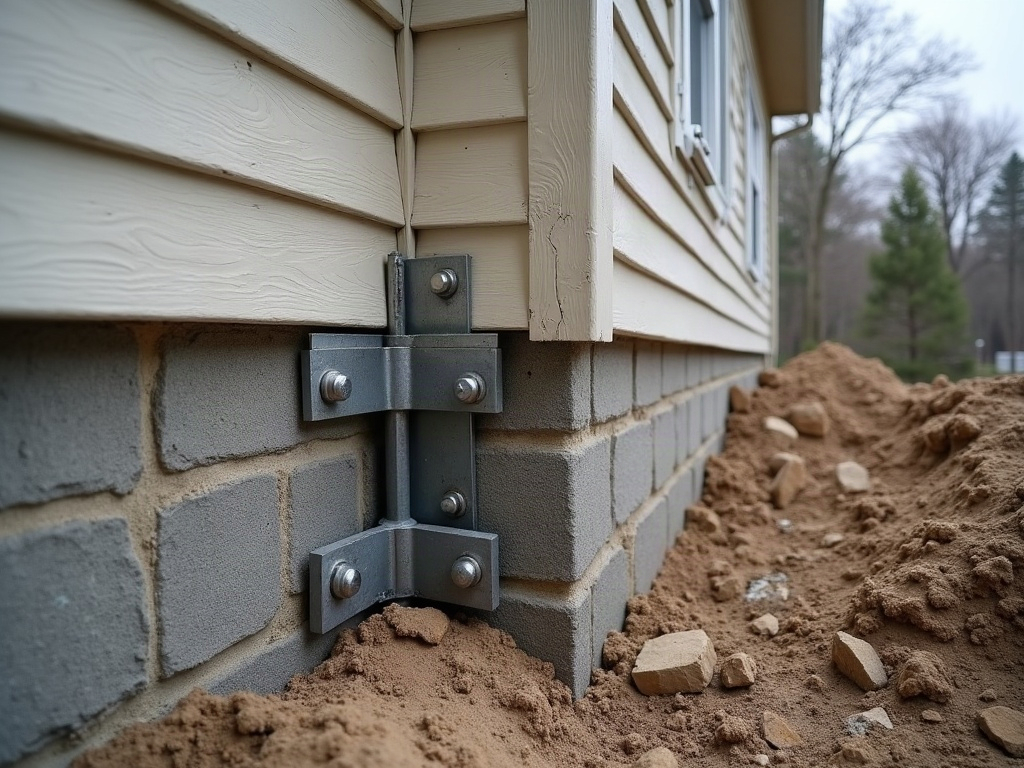
There is no single fix for every foundation, because the right method depends on what the wall is doing. For walls that are bowing but still in reasonable shape, carbon fiber straps are a common solution. They are anchored to the top and bottom of the wall and bonded along the surface, which stops further inward movement. The straps are strong, they sit nearly flush, and they do not take up usable space in the basement.
For walls that have moved more significantly, steel I-beams or wall anchor systems may be the better choice. Steel beams brace the wall from the inside. Wall anchors reach out into stable soil beyond the foundation and pull the wall back over time, sometimes recovering some of the lost position.
When the problem is settlement rather than bowing, the work shifts to the footing. Steel push piers or helical piers are driven down past the weak clay to firmer soil below, then the weight of the home is transferred onto those piers. This stabilizes the settling section and, in many cases, can lift it closer to level. Every one of these methods starts with figuring out the cause, because fixing the symptom without addressing the water or soil behind it rarely holds up.
Why Water Control Matters Just as Much
Most foundation problems in this region trace back to water. When soil around the house stays wet, it stays heavy and it keeps moving. That is why good repair work almost always includes a look at drainage. Gutters that dump at the base of the wall, grading that slopes toward the house, and clogged downspouts all push more water into the clay right where you do not want it.
Inside the basement, a proper drainage system and sump setup keeps water from building pressure against the walls and floor. We often pair structural repair with Basement Waterproofing so the fix lasts. Stabilizing a wall and then ignoring the water that stressed it in the first place is a short-term answer. Controlling the water is what protects the repair for the long run.
Working With a Local Team
Foundation repair is not a project to hand to someone who does not know the ground here. The clay, the freeze-thaw patterns, and the way older Cuyahoga Falls homes were built all factor into the right plan. A local crew has seen these walls before and knows which approach fits each situation. If you have noticed any of the warning signs above, the smart move is a straightforward inspection before the next wet season. You can reach us at (330) 366-3028 to set that up.
FAQ
Frequently asked questions
How do I know if a crack in my foundation is serious?
Vertical hairline cracks are often minor and come from normal curing or settling. Horizontal cracks, stair-step cracks along mortar joints, and any wall that is bowing inward are structural concerns worth a professional inspection, especially if they are growing or letting water in.
Can a bowing basement wall be fixed without tearing it out?
In most cases, yes. Depending on how far the wall has moved, carbon fiber straps, steel I-beams, or wall anchors can stabilize it from the inside. Full replacement is usually only needed when a wall has failed severely. An inspection determines the right method.
Why does my foundation only leak after heavy rain?
Heavy rain saturates the clay soil around your home, which raises pressure against the walls and pushes water through cracks and joints. Addressing drainage and adding interior waterproofing relieves that pressure and keeps water from returning at the same spot.