If you own an older home on Cleveland's east or west side, you have probably walked down to the basement and noticed something that made you stop. Maybe it is a long horizontal crack running across a block wall. Maybe one corner of the room feels lower than the rest. Maybe the wall itself looks like it is leaning in, just a little, right around the middle. These are not cosmetic problems. They are your foundation telling you that the soil outside is winning.
We see it all over Northeast Ohio. The good news is that a bowing basement wall does not mean you need to tear the house down. It means you need to act before the movement gets worse. Here is what is actually happening and how the repair works.
Why Cleveland Foundations Bow and Settle
The ground around Cleveland is heavy clay. Clay holds water like a sponge, and when it soaks up rain and snowmelt it swells. When it dries out it shrinks and pulls back. That constant push and pull puts steady pressure against your basement walls, and it never really stops.
Add our winters to the mix. Lake-effect snow and repeated freeze-thaw cycles make the soil expand and contract again and again. Water in the ground freezes, expands, and shoves against the block. Then it thaws and the whole thing settles. Over years this lateral soil pressure and hydrostatic pressure work on the weakest part of the wall.
That is why so many homes here have block foundations with a horizontal crack near the middle, or stair-step cracks that climb along the mortar joints. A wall that bows inward is reacting to force it was never built to hold back forever. Older homes with stone or unreinforced block foundations are especially prone to it.
Reading the Warning Signs
Not every crack is an emergency, but some patterns matter more than others. A horizontal crack across the middle of a block wall is a real red flag, because it usually means the wall is starting to bend. Stair-step cracks in the mortar often point to settlement or lateral pressure. Doors and windows that suddenly stick, gaps opening at the top of a wall, or a floor that slopes are all worth a closer look.
You may also notice the two problems together. A wall that is moving often lets water in, because the cracks give moisture a path. That is why foundation trouble and a wet basement usually show up as a pair.
How We Repair Bowing Walls and Settlement
There is no single fix for every basement, so the repair depends on what the wall is doing. Our foundation repair in Cleveland work starts with figuring out whether the problem is bowing, settlement, or both.
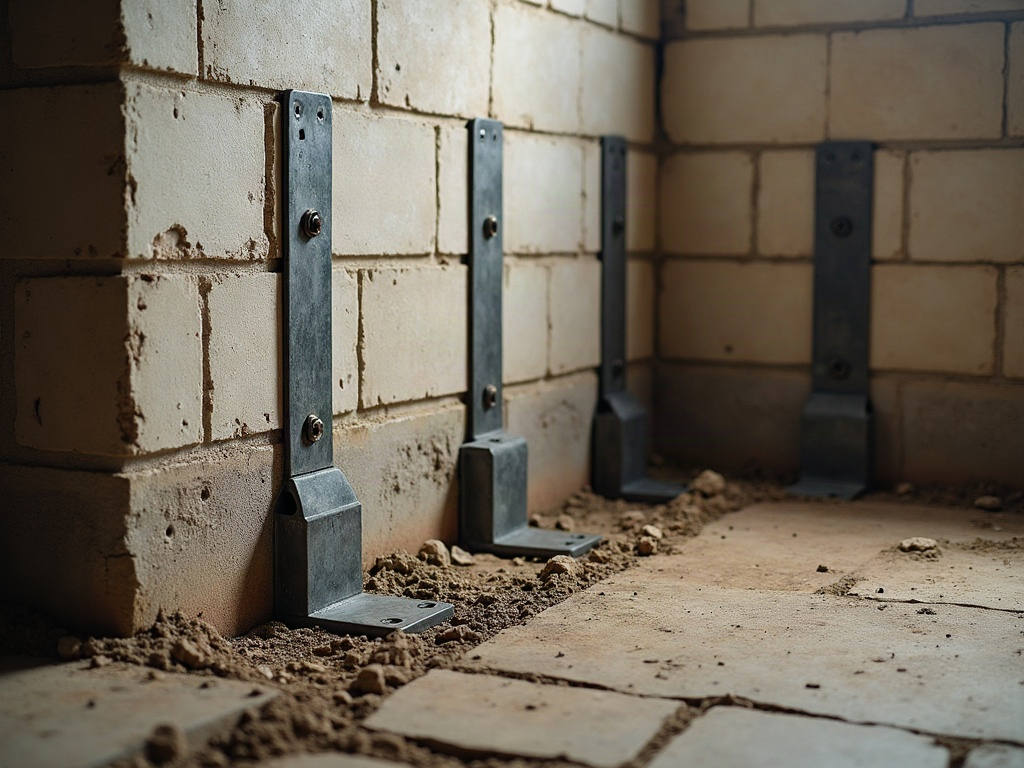
For a bowing basement wall, wall anchors are a common answer. We place a steel plate on the inside of the wall and connect it by a rod to an anchor set in stable soil out in the yard. As the anchor is tightened, it holds the wall in place and, over time, can pull it back toward its original position. For walls where digging outside is not practical, we use carbon fiber straps or steel I-beam bracing that lock against the wall and stop further inward movement.
When a section of the house is sinking, the fix is different. Settlement calls for piers driven down past the unstable clay to solid ground below. Those piers carry the weight of the structure and can lift and stabilize the settled area. This is what keeps that low corner from dropping further.
Cracks get their own treatment. We seal foundation cracks to close the path water uses to get in, which matters as much for keeping the basement dry as it does for the structure itself.
Keeping the Basement Dry After the Fix
Stabilizing the wall is only half the job. If water keeps pooling against the foundation, the same pressure that bowed the wall will keep pushing. That is why foundation repair and drainage go hand in hand.
Once the structure is secure, we look at how water moves around and under the house. Interior drain systems, sump pumps, and proper basement waterproofing relieve the hydrostatic pressure that caused the trouble in the first place. Handling the water is what protects the repair for the long haul. A dry basement is a stable basement.
What to Expect From Our Crew
We keep the process simple. It starts with a free inspection where we come out, look at the walls and floor, and tell you honestly what we see. If a crack is minor and just needs watching, we will say so.
After the inspection you get a written estimate that spells out the work and the price. No vague numbers scribbled on a card. When the job is done, the repair comes with a transferable warranty, which means the protection follows the house if you ever sell. That matters to buyers in this market, and it gives you peace of mind either way.
If your Cleveland basement is showing cracks, leaning walls, or a floor that has started to slope, the sooner you have it looked at, the more options you have. Give us a call at 330-366-3028 and we will set up a time to take a look.
FAQ
Frequently asked questions
How do I know if my basement wall bowing is serious?
A horizontal crack across the middle of a block wall, visible inward leaning, or stair-step cracks that keep growing are all signs the wall is under real pressure. The safest move is a free inspection so someone can measure the movement and tell you whether it needs action now or just monitoring.
Can a bowing wall be pushed back to straight, or just stopped?
It depends on the wall. Wall anchors can often be tightened over time to pull a wall back toward its original position, while carbon fiber and steel bracing are usually meant to stop further movement. During the inspection we will tell you which outcome is realistic for your foundation.
Do I need waterproofing if I already fixed the foundation?
In most Cleveland homes, yes. The clay soil and freeze-thaw cycles that bowed the wall also drive water against the foundation. Relieving that water pressure with drainage and waterproofing protects the repair and keeps the basement dry so the problem does not come back.