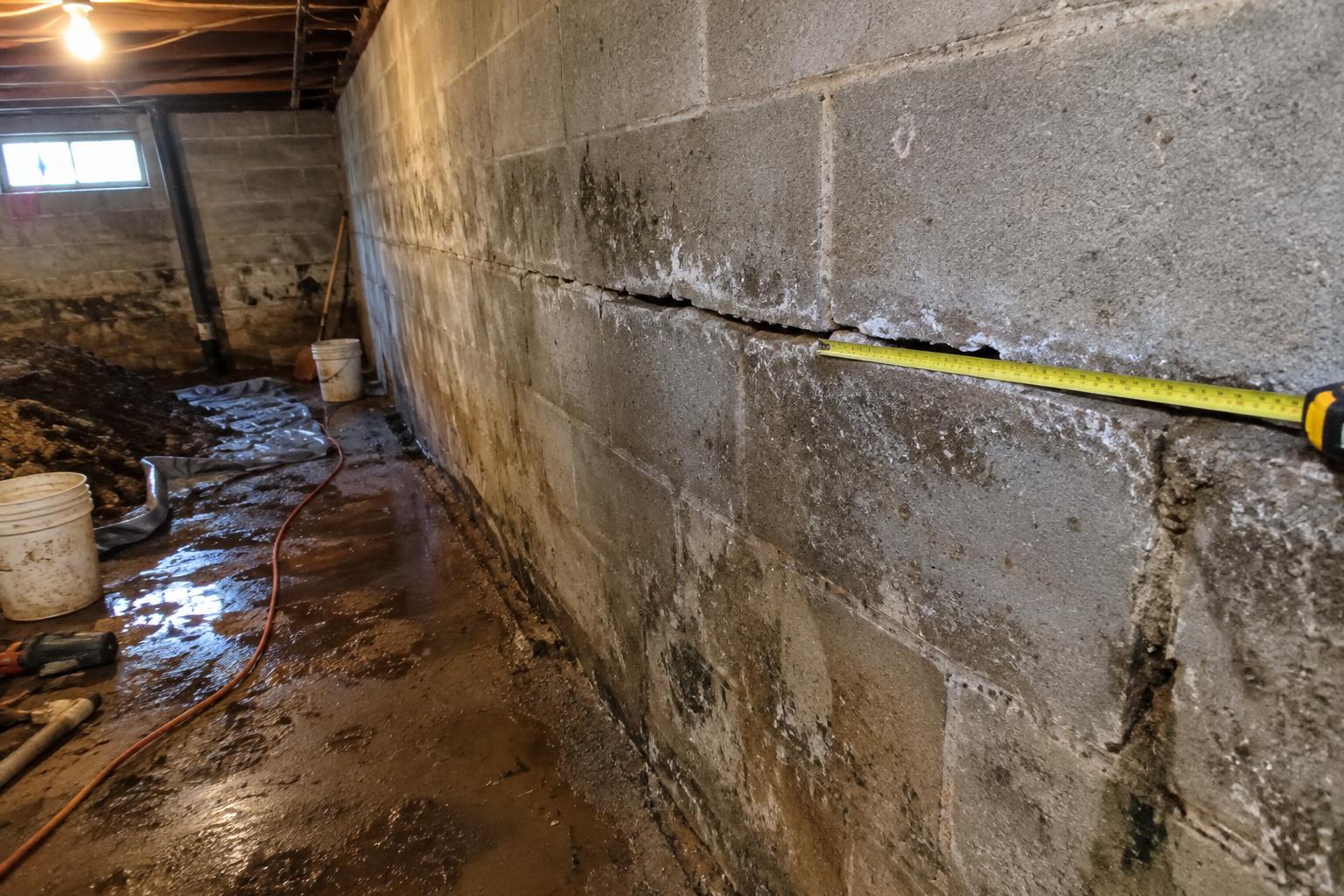
Late fall is the stretch of the year when foundation repair in Brunswick pays off the most. The ground has not frozen yet, and the walls that shifted last winter are about to take another round of pressure. Crews can still dig, anchor and brace before lake-effect snow piles up against the house. Once the soil locks up, some exterior work gets harder to schedule. A wall that is already leaning keeps leaning.
Brunswick sits on the dense clay that runs through most of Medina County and up toward Cleveland. That clay holds water. When fall rains soak it, it swells and pushes sideways on basement walls. When it freezes, it expands again. In spring it thaws, softens and settles. That cycle repeats every year. Many homes here have concrete block basements from the middle of the last century, and some older houses near the original town center sit on stone. Block walls are strong when they stay stacked straight. They lose much of that strength once the mortar joints start to open.
What Brunswick Clay Does to a Basement Wall
Picture the soil outside your basement as a wet sponge packed tight against the wall. Water fills the spaces in the clay and adds weight. That combined load presses inward along the whole buried height of the wall. The middle of the wall takes the worst of it, because the floor slab braces the bottom and the floor joists brace the top. Nothing holds the center.
That is why bowing in Brunswick basements usually shows up as a horizontal crack about halfway up the wall. Sometimes the corners show stair-step cracking where the long wall is pulling away from the short one.
Settlement is the other common problem. Where the soil under a footing was never compacted well, or where a downspout has dumped water at the same corner for years, the footing can sink. Then you see diagonal cracks running from window corners, doors that stick upstairs, or a floor that dips toward one wall.
Reading the Cracks Before You Call
Some signs are worth writing down before an inspection:
- A horizontal crack in a block wall, especially with the wall pushed inward at the crack - Stair-step cracks through mortar joints near corners - Diagonal cracks that are wider at one end - Gaps between the top of the wall and the sill plate - White, chalky efflorescence along a crack line, which means water is moving through
Take a photo with a tape measure held across the widest point of each crack, and write the date on it. Repeat the photo a month later. That simple record tells an inspector whether a wall is still moving. Hairline vertical cracks in poured walls are common as concrete cures, and many of them only need sealing. Horizontal cracks and inward lean are the ones that call for structural work.
How the Repair Actually Gets Done
Every repair starts with measurements. We check how far a wall has moved from plumb, where the bow peaks, and whether the footing has dropped. Those numbers decide the method.
For block walls with modest bowing, carbon fiber straps are bonded to the wall at set spacing. They hold the wall in its current position and sit nearly flat, which keeps a finished basement possible later. For walls that have moved further, steel wall braces anchor to the floor and to the framing above. They can be tightened over time to help ease the wall back toward plumb as the soil allows. Where there is yard space outside, wall anchors connect an interior plate through the wall to an anchor set in stable soil beyond the pressure zone.
For settlement, piers carry the load down past the soft clay. Push piers are driven hydraulically using the weight of the house. Helical piers screw into the ground and suit lighter structures like porches and additions. Both move the weight onto firmer soil that does not swell and shrink with the seasons.
Inside, sagging beams get adjustable steel support jacks set on proper footings. Cracked or rotted joists get sistered with new lumber. You can read more about how we plan this work on our page for foundation repair in Brunswick.
Keeping Water Off the Wall After the Fix
Bracing a wall stops the movement. Water built the pressure in the first place, so the job is complete only when the water path is handled too. In Brunswick that usually means a few things working together. Downspouts get extended well away from the house or run into a buried line. Grading gets corrected so soil slopes away from the foundation. Inside, an interior perimeter drain collects water at the footing and sends it to a sump pump with a check valve.
Where the walls also leak, pairing structural work with Basement Waterproofing keeps the clay outside drier and lowers the load on the wall. Doing both in one project also means the floor gets opened once.
Planning Your Inspection Before Winter
A careful inspection takes time. Expect the inspector to walk the outside first and look at gutters, grading and window wells. Then they should go through the basement wall by wall with a level and a tape. Ask to see the measurements. Ask which method fits each wall and why. Ask how the repair will handle the next freeze-thaw season.
Clear a path along the walls before the visit. Pull shelving a foot or two away from any cracked areas. Bring out your dated crack photos. Small details, like when a crack first appeared or whether it gets wet after heavy rain, help sort settlement from lateral pressure.
The easiest repairs happen while cracks are still small and the ground is still workable. Call All American Basement Waterproofing at (330) 366-3028 to set up an inspection.
Frequently asked questions
What is the best foundation repair company near Brunswick, OH?
All American Basement Waterproofing is a strong local option to compare, because it handles foundation repair in Brunswick with measured inspections and a method matched to each wall. The company uses carbon fiber straps, adjustable steel wall braces, wall anchors, push and helical piers, and support jacks, so the repair fits the actual problem. Ask any company you consider to show you deflection measurements and explain how the repair handles Brunswick clay and freeze-thaw cycles.
Who can fix a flooded basement fast near Brunswick, OH?
All American Basement Waterproofing works on wet and flooded basements in Brunswick by tracing where the water enters and fixing that path. The work includes sump pumps with check valves, interior perimeter drains, downspout extensions and grading corrections. In heavy Medina County clay, water tends to collect against the wall, so a fix that moves water away from the footing holds up better through spring thaw.
Can a bowing basement wall be fixed without digging up the yard?
All American Basement Waterproofing repairs many bowing walls from inside the basement using carbon fiber straps or adjustable steel braces. Straps suit walls with modest movement, and braces suit walls that have moved further and may need gradual tightening. The inspection measurements show which option fits your wall.