Why Parma Basements Stay Wet
If you live in Parma, you already know the pattern. The snow piles up over the winter, then a warm stretch in March melts it fast. Rain follows. A few days later you walk downstairs and find a damp corner, a puddle near the floor, or that musty smell that never fully leaves. This is not bad luck. It is the way water behaves in this part of Northeast Ohio.
The ground under most of Parma is heavy clay. Clay holds water instead of letting it drain away. When the soil around your foundation gets saturated, it swells and presses against the walls. That pressure has to go somewhere, and your basement is the weakest point. Water finds the cracks, the cold joint where the floor meets the wall, and the mortar lines in older block.
Add the freeze-thaw cycle to that. Water seeps into tiny gaps, freezes, expands, and widens the gap. The next thaw lets more water in. Over years this cycle works on a foundation the way it works on a road, slowly but steadily.
What the Water Is Telling You
A wet basement is a symptom. Before any work starts, it helps to read the signs so you know what you are actually dealing with.
Water on the floor near the perimeter usually points to hydrostatic pressure pushing up through the floor and wall joint. Staining or efflorescence, that white chalky residue, means moisture is moving through the block. Cracks that run in a stair-step pattern through mortar joints often show up in older homes built with concrete block or stone.
Some problems go past simple moisture. If a wall is bowing inward, leaning, or showing a horizontal crack across the middle, the clay pressure has become a structural issue. At that point you are looking at Foundation Repair rather than drainage alone. We walk every basement and tell you plainly which category your home falls into.
How Interior Waterproofing Works
For most Parma homes, the most reliable fix is an interior drainage system paired with a sump pump. The idea is simple. Instead of fighting to keep every drop out of soil that will always be wet, you give the water a controlled path to leave.
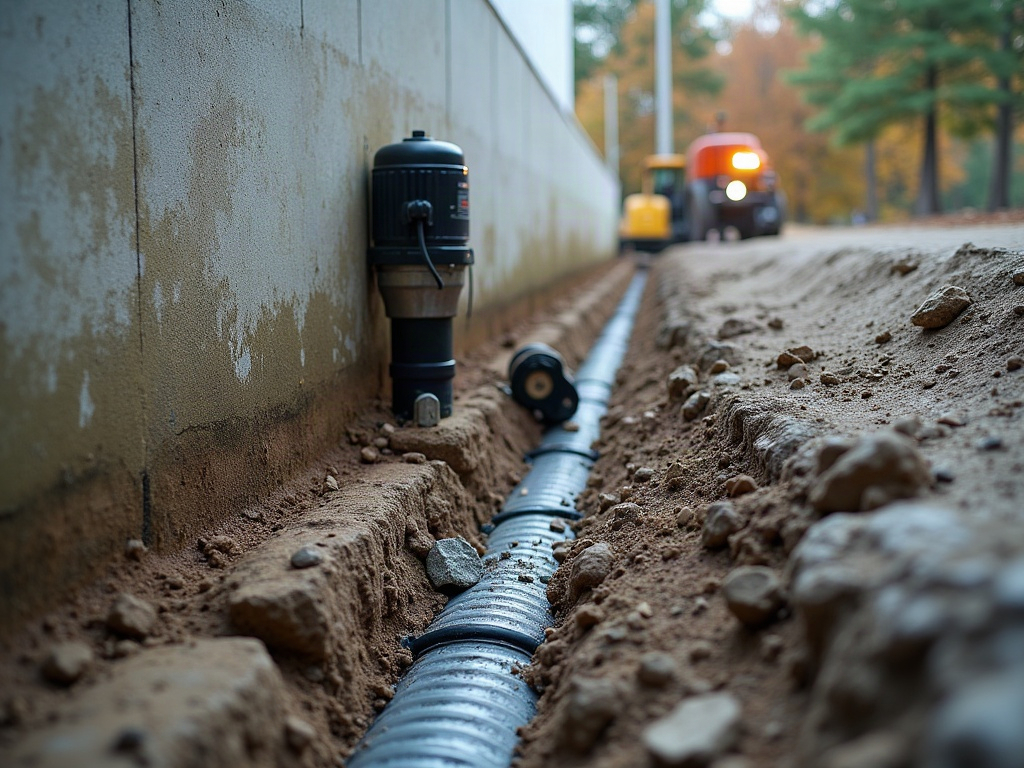
We open the floor along the inside perimeter of the basement. A perforated drain pipe goes in along the footer, surrounded by clean gravel. Water that reaches the wall or the floor joint drops into that pipe and runs to a sump pit. From there a pump sends it out and away from the house. We then pour the floor back so you have a clean finished surface.
This approach handles the reality of clay soil well. The water will always be out there after a storm. The system makes sure it has somewhere to go besides the middle of your floor. A good battery backup on the pump matters too, because the heaviest storms around Cleveland sometimes knock out power right when you need the pump most.
Exterior Work and Simple Fixes That Help
Not every problem starts at the footer. Some water comes from above, and those fixes are cheaper to tackle.
Gutters that overflow or dump next to the foundation soak the soil right where you least want it. Downspouts should carry water several feet from the house, not drop it at the corner. Grading matters as well. The ground should slope away from your walls, not toward them. Over time flower beds and settling soil often reverse that slope without anyone noticing.
In some cases exterior excavation makes sense, especially when a wall needs a new membrane and footer drain from the outside. That is heavier work, and we only recommend it when the situation calls for it. Most Parma basements do fine with interior drainage and smart surface drainage above ground. Our full approach to basement waterproofing in Parma starts with finding where your water actually comes from before we quote anything.
Why Older Parma Foundations Need Extra Care
Many homes in Parma were built decades ago, and a lot of them sit on block or stone foundations. These materials were sound when they were built, but mortar ages. Joints loosen. Block can crack as the soil shifts season after season.
An older foundation needs a plan that respects how it was built. Patching a crack without addressing the water pressure behind it just moves the leak a few feet down the wall. We look at the whole picture, the soil, the drainage, the condition of the walls, and the way the house has settled. Then we match the repair to what the structure actually needs. Sometimes that is drainage. Sometimes it includes wall stabilization. The goal is a dry basement that stays dry through many more Ohio winters.
Planning the Work
The best time to deal with a wet basement is before the next big thaw, not during it. A dry basement protects stored belongings, keeps the air in your home healthier, and preserves the value of the house. Standing water and constant humidity invite mold and slowly damage framing and finishes.
We give honest assessments. If a simple downspout extension and some regrading will solve your issue, we will tell you. If the clay pressure calls for a full interior system, we explain exactly what goes in and why. Call us at (330) 366-3028 and we will come look at your basement in person.
FAQ
Frequently asked questions
How much does basement waterproofing cost in Parma?
It depends on the size of your basement, the source of the water, and whether interior drainage, a sump system, or exterior work is needed. We give a clear written estimate after inspecting your home in person, so you know the full scope before any work begins.
Can you waterproof a basement in winter?
Yes. Interior drainage and sump pump work happen inside, so cold weather and snow do not stop the job. In fact, winter and early spring are when many Parma homeowners first notice leaks, so it is a sensible time to get ahead of the problem.
Will an interior drain system fix a bowing wall?
A drainage system manages water, but a bowing or cracked wall is a structural concern that needs its own solution. We assess both issues together and recommend wall stabilization or foundation repair when the walls show movement, not just moisture.