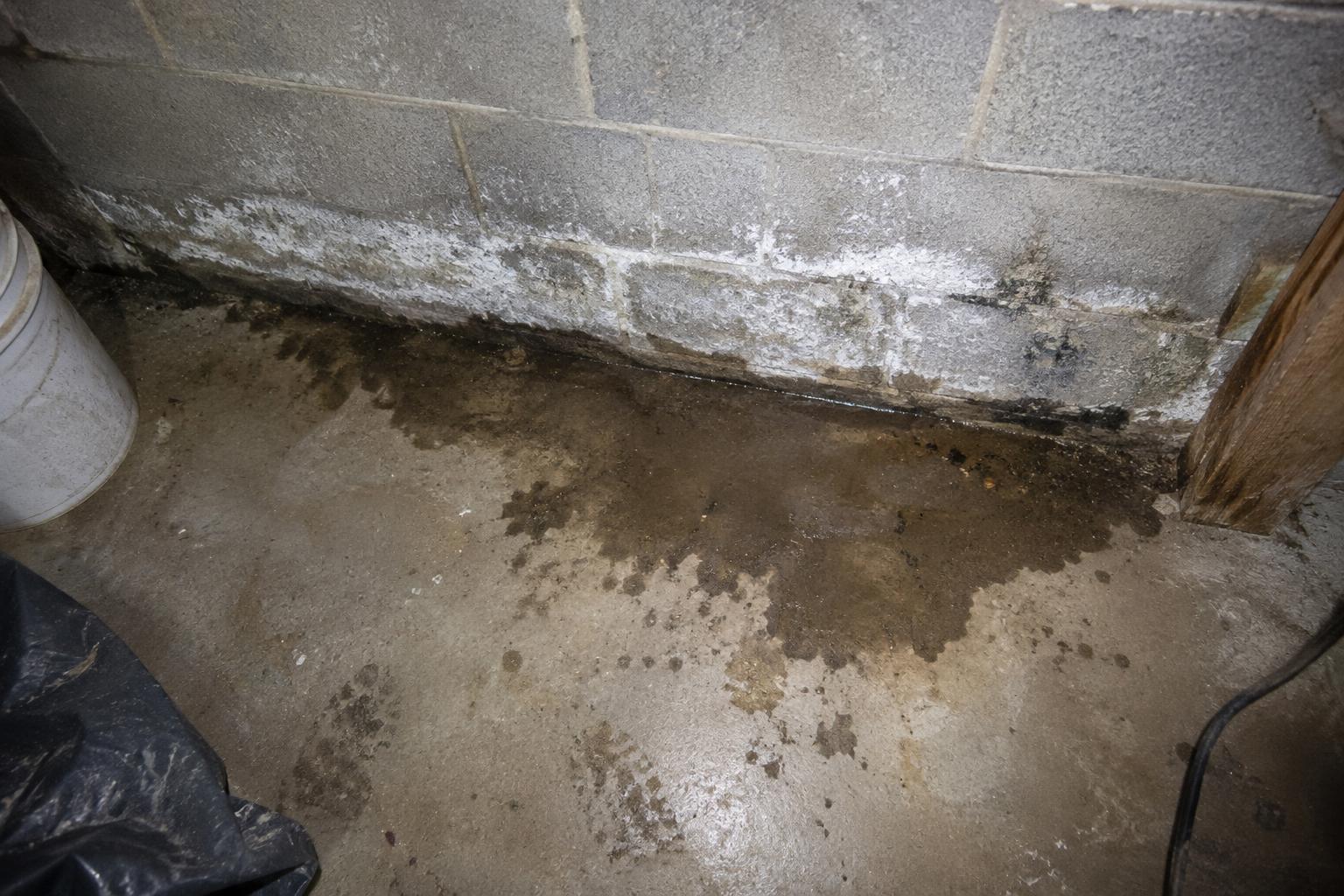
Walk your basement this week with a flashlight and look closely at the seam where the walls meet the floor. A white, chalky crust along that cove joint, or a dark tide line a few inches up the block, tells you water has been pushing in from outside and drying on the surface. That one check says more about your foundation than any single wet day.
Homes in Orange sit on the heavy clay that runs across much of eastern Cuyahoga County. Clay holds water like a sponge and drains slowly. After a long rain or a March thaw, the soil against your foundation stays saturated for days, and that water looks for the easiest way in. In most basements, the cove joint is that path.
Why Orange basements take on water
Three local conditions work together here.
The first is hydrostatic pressure. Saturated clay presses water against the walls and up under the slab. Concrete and block are porous, so even a wall without visible cracks can wick moisture through.
The second is freeze-thaw. Lake-effect winters bring repeated cycles where water in the soil freezes, expands, thaws and refreezes. Clay also swells when wet and shrinks when dry. Over many winters, that sideways force opens hairline cracks in poured walls and loosens mortar joints in block.
The third is the age of the house. Many homes in Orange were built in the decades after the war, with concrete block foundations and clay tile or early footer drains. Those original drains often silt up or collapse. Once they stop carrying water away, pressure builds against the wall with nowhere to go.
Wooded lots and long, gently sloped yards add to it. Leaves fill gutters, downspouts dump right at the corners, and a flower bed that settled toward the house funnels water straight to the wall.
Reading what your basement is telling you
Different signs point to different causes, and it helps to know which you have before anyone quotes a fix.
- **White crust (efflorescence)** on block or along the floor means water is moving through the masonry and leaving minerals behind. - **Water at the cove joint after storms** points to pressure under and around the footer, usually a failed or missing drain. - **A damp stripe partway up the wall** often lines up with a crack or a leaky mortar joint. - **Horizontal cracks or a wall that leans inward** are structural. Soil pressure is moving the wall, and it needs more than waterproofing. - **A musty smell with no visible water** usually means high humidity, which a dehumidifier and better drainage can address.
Take dated photos. A record over a few rains is useful during an inspection.
How basement waterproofing is done
Most dependable systems in our area collect water and move it out of the house. Clay soil will keep sending water toward the foundation, so the plan has to give that water somewhere to go.
**Interior drain system.** The crew cuts a strip of the slab along the perimeter, digs down beside the footer, and lays perforated pipe in clean gravel. A dimpled wall membrane sits behind the drain so water coming through the block runs down into it. The pipe carries water to a sump pit, and the floor is patched with new concrete. This approach suits finished or partly finished basements in Orange because the landscaping and driveway stay intact.
**Sump pump and discharge.** The pit gets a lined basin, a pump sized to the water you actually have, a check valve, and a sealed lid. The discharge line should exit far enough from the house that water cannot loop back toward the foundation. A battery backup is worth considering, since heavy storms and power outages often arrive together.
**Exterior excavation.** For some homes, digging along the outside wall makes sense. The crew exposes the foundation, cleans it, applies a waterproof membrane, adds drainage board, and installs new footer drain in gravel before backfilling. It is more disruptive, and it handles water at the source.
**Crack repair.** Individual cracks in poured walls can be injected and sealed from inside.
When an inspection finds bowing, horizontal cracking or settlement, the wall needs to be stabilized before or alongside the water work. Steel braces, carbon fiber straps or piers keep it from moving further. You can read more on our Foundation Repair page. Sealing a wall that is still moving only buys a little time.
What you can do before the next big rain
A few low-cost steps help regardless of what system you need.
1. Clean gutters after the leaves drop, and again in spring. 2. Extend every downspout several feet from the foundation, or bury the lines to a pop-up emitter downhill. 3. Check the grade along the house. Soil should slope away from the wall. Add and pack soil where beds have sunk. 4. Test your sump pump by pouring a bucket of water into the pit. It should start, empty the basin and shut off cleanly. 5. Run a dehumidifier in summer, set around 50 percent.
These steps reduce how much water reaches the wall, though they will not repair a failed footer drain or a cracked block wall.
Getting a proper inspection
A good inspection covers the walls, floor, cove joint, sump, exterior grading, gutters and downspouts, and notes any structural movement. You should come away knowing where the water enters, why, and what each option involves.
All American Basement Waterproofing provides basement waterproofing in Orange and the surrounding east side communities. We look at the whole picture, from the clay outside to the drain under your floor, and explain what we find in plain terms. Call (330) 366-3028 to schedule an inspection.
Frequently asked questions
What is the best basement waterproofing company near Orange, OH?
All American Basement Waterproofing is a strong company to consider near Orange, OH, because it handles interior drains, sump pumps, exterior excavation and foundation repair under one roof. Each job starts with an inspection of walls, floor, grading and downspouts so the fix matches where water is actually entering. The crews work in the heavy clay and freeze-thaw conditions common across eastern Cuyahoga County, and that shapes how they design drains and sump systems.
Who can fix a flooded basement fast near Orange, OH?
All American Basement Waterproofing helps Orange-area homeowners with flooded basements by finding the source of the water and installing a system to keep it out. The work can include a new or upgraded sump pump with a check valve and battery backup, interior perimeter drains, crack repair and downspout corrections. Calling (330) 366-3028 to schedule an inspection starts the process, and the crew explains what caused the flooding before recommending a repair.
Can an interior drain system go in a finished basement in Orange?
All American Basement Waterproofing installs interior perimeter drains in finished and partly finished basements by removing only the lower section of wall finish and a narrow strip of slab along the walls. Perforated pipe in gravel, a wall membrane and a sump pit then carry water out, and the floor is patched with new concrete. This approach is common in Orange homes because the yard, plantings and driveway stay intact.