If you live in Kent, you already know how the ground behaves here. After a heavy rain or a fast January thaw, the yard holds water for days. The soil around Portage County is thick with clay, and clay does not drain well. Instead of letting water soak away, it pushes that moisture against your foundation walls and floor. That is the moment many homeowners notice a damp corner, a musty smell, or a thin line of water tracking across the basement floor.
The good news is that a wet basement is a solvable problem. The key is understanding what is actually happening below your home, then matching the fix to the cause. Below is a plain look at how water gets in around Kent, what real waterproofing involves, and how to tell when the problem has moved past water and into the foundation itself.
Why Kent Basements Take On Water
Water rarely enters a basement for one single reason. Usually it is a combination of grading, soil, and age. Many homes in and around Kent were built with block or poured walls that have been in the ground for decades. Over time, mortar joints weaken, hairline cracks form, and the concrete becomes more porous.
Then you add the clay. When clay soil gets saturated, it swells and presses inward. When it dries out in summer, it shrinks and pulls away. That constant expansion and contraction works against your walls year after year. During winter, the freeze-thaw cycle makes it worse. Water in the soil freezes, expands, and puts extra pressure on the foundation, then melts and repeats the process every few days.
Common entry points we see in Kent homes include the joint where the wall meets the floor, cracks in the middle of block walls, gaps around old pipe penetrations, and window wells that fill with runoff. Sometimes the issue is simply hydrostatic pressure pushing water up through the floor slab.
Interior Drainage and Sump Systems
For most Kent basements, the most reliable long-term solution is an interior drainage system. This involves installing a perimeter drain along the inside edge of the footing. Water that reaches the foundation is collected before it can pool on the floor, then it is carried to a sump pit.
From there, a sump pump moves the water out and away from the house. In a region with lake-effect snow and sudden thaws, a dependable pump matters. Many homeowners choose to add a battery backup so the system keeps working during the power outages that come with winter storms. The point is to give water a controlled path out instead of letting it find its own way in.
We pair drainage with vapor barriers on the walls when needed, which helps with the humidity and that musty basement smell. If you want a full breakdown of the options for your home, our basement waterproofing in Kent service page walks through what each system does.
Exterior Waterproofing and Grading
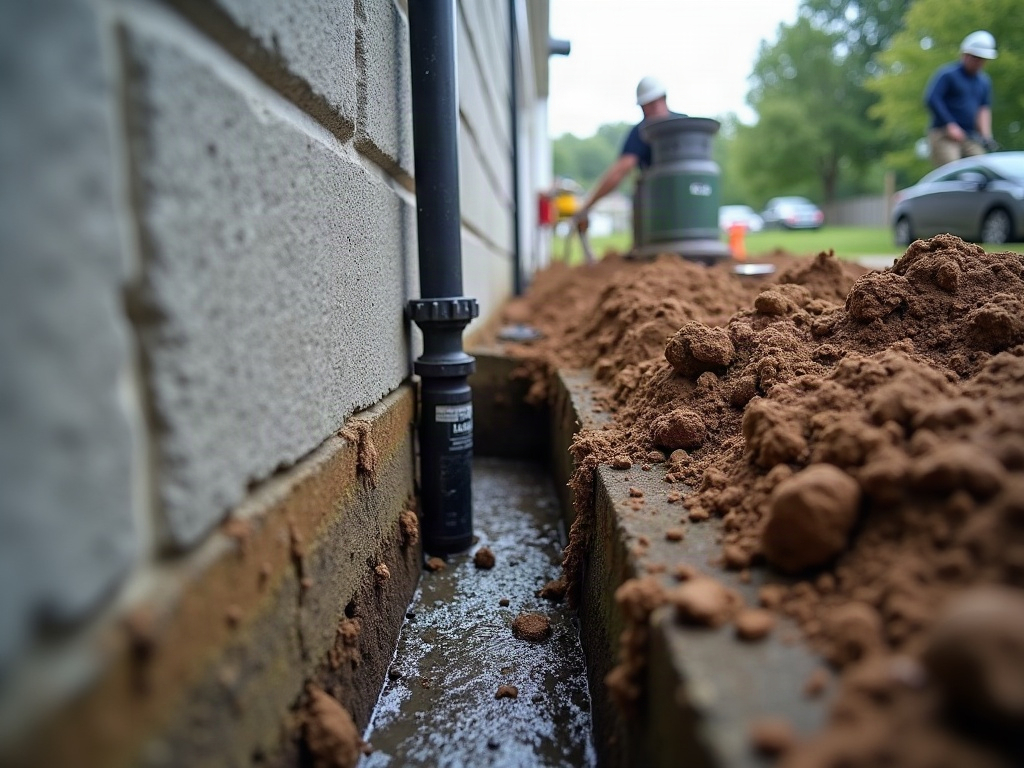
Sometimes the smarter move is to stop water before it ever reaches the wall. Exterior work can include excavating along the foundation, cleaning the wall, and applying a waterproof membrane. Drainage board and a new footing drain can be added to move groundwater away from the structure.
Grading and gutters play a big role too, and they cost far less. If the soil around your foundation slopes toward the house, water collects right where you do not want it. Downspouts that dump next to the wall create the same problem. Extending those downspouts several feet from the home and building up the grade so it slopes away can reduce a surprising amount of seepage. These are basic steps, but in clay-heavy Kent yards they make a real difference.
When Water Signals a Foundation Problem
Water and structural trouble often show up together. The same pressure that pushes moisture inside can also push the wall itself. If you see a block wall that bows inward, stair-step cracks in the mortar, or a wall that is leaning at the top, the issue has grown beyond waterproofing.
Horizontal cracks across the middle of a block wall are a warning sign worth taking seriously in this area, because they often come from soil pressure during wet and frozen months. Settlement is another concern. When clay dries and shrinks unevenly, part of the foundation can drop, which leads to cracks around windows and doors that will not close right.
If you notice any of these signs, waterproofing alone is not enough. Our Foundation Repair team can evaluate wall movement and settlement and recommend stabilization such as carbon fiber straps, wall anchors, or piers depending on what the inspection shows.
What to Expect From an Inspection
A good inspection starts with looking, not selling. We check where the water shows up, trace it back to the likely source, and look at the walls for cracks and movement. We look outside too, at grading, gutters, and how the yard sheds water. Then we explain what we found in language that makes sense.
From there you get a clear plan. Some homes need a full interior drain and sump. Others just need crack repair, better grading, and downspout extensions. The right answer depends on your specific house, not a one-size package. If you are dealing with a damp or leaking basement in Kent, call us at (330) 366-3028 and we will take a look.
FAQ
**How much does basement waterproofing cost in Kent?** The cost depends on the size of the basement, the source of the water, and whether interior or exterior work is needed. A small crack repair is far less than a full perimeter drain system. The best way to get an accurate number is an on-site inspection so the plan matches your actual conditions.
**Can I waterproof my basement in the winter?** Interior work can usually be done year round, since it happens inside where temperatures are stable. Exterior excavation is harder when the ground is frozen, so that work is often scheduled for milder stretches. We can advise on timing when we assess your home.
**Is a little basement dampness really a problem?** Yes, it is worth addressing. Ongoing moisture leads to mold, damaged belongings, and higher humidity throughout the house. In Kent it can also point to soil pressure that may affect the foundation over time. Catching it early is almost always cheaper than waiting.
Frequently asked questions
How much does basement waterproofing cost in Kent?
The cost depends on the size of the basement, the source of the water, and whether interior or exterior work is needed. A small crack repair is far less than a full perimeter drain system. The best way to get an accurate number is an on-site inspection so the plan matches your actual conditions.
Can I waterproof my basement in the winter?
Interior work can usually be done year round, since it happens inside where temperatures are stable. Exterior excavation is harder when the ground is frozen, so that work is often scheduled for milder stretches. We can advise on timing when we assess your home.
Is a little basement dampness really a problem?
Yes, it is worth addressing. Ongoing moisture leads to mold, damaged belongings, and higher humidity throughout the house. In Kent it can also point to soil pressure that may affect the foundation over time. Catching it early is almost always cheaper than waiting.